
Researchers & PhD teams
Move from literature to a defensible experiment faster. Catch missing pieces before bench work and keep the reasoning with the protocol.
Experiment Intelligence for Life-Science R&D
Describe what you want to test. Telomis turns it into a structured experiment: design, controls, critical parameters, step-by-step protocol, materials, troubleshooting and optional sourcing.
Start from an idea, paper, existing protocol or DOI.
 Experiment BriefChecked
01One sentence → a structured experiment
It turns the question into an experiment you can inspect, challenge and run.
“Does doxorubicin reduce viability in PC3 cells?”
PC3MTTdose-responsevehicle controln=3
2 issues found
Checked · 2 decisions before Ready to Run
02The problem
It is turning scattered information into a defensible experiment.
Researchers move between papers, protocol repositories, vendor catalogs, spreadsheets, notebooks and general AI just to decide what to run. Telomis connects those decisions into one experimental workflow.
$28B lost each year to irreproducible preclinical research in the US.
Freedman et al., PLOS Biology, 2015.
03How it works
Describe the scientific question or paste a source.
Telomis structures groups, controls, readouts and critical parameters.
It checks what is missing, inconsistent or likely to weaken the result.
Get the executable protocol, required materials, lab match and optional sourcing.
In development: guide execution, capture what happened and use the result to design the next experiment.
04Scientific Challenge
Telomis does not just generate a protocol. It challenges the experiment.
Missing controls. Undefined critical parameters. Readout incompatibilities. Weak success criteria. Unnecessary complexity. Every finding tells you why it matters and what to change.
No untreated control to set 100% viability.
Why it matters: without it, the dose-response has no reference point.
Change: add an untreated arm alongside the vehicle control.
The MTT incubation time is not set.
Why it matters: it decides whether the signal stays in the readable range.
Change: set one incubation time and keep it the same across all wells.
Experiment BriefChecked05Experiment Brief
Scientific question. Hypothesis. Design. Primary endpoint. Critical parameters. Readiness.
Telomis gives the experiment a structure before it gives you more text.
06Protocol
The approved design becomes a step-by-step procedure with volumes, concentrations, timing, equipment, checkpoints and provenance.
When Telomis proposes a value instead of reading it from a source, it says so.
Add doxorubicin to each treatment well at its assigned concentration.
VOLUME 100 µLUSER
Incubate the plate before adding MTT.
TEMP 37 °CTIME 48 hLITERATURE
Read absorbance after solubilising the formazan.
READOUT 570 nmPROPOSED
Checkpoint · vehicle wells read inside the linear range.
07Materials + My Lab
Telomis derives scientific material requirements from the experiment, matches them against My Lab, checks compatibility, and shows what is still missing.
Protocol defines the requirement. My Lab checks availability. Sourcing comes after the science.
08Cost & Sourcing
For missing materials, Telomis can resolve compatible products, compare suppliers and estimate the additional purchase required.
Scientific compatibility comes before price.
ExperimentProtocolMaterials / My LabCost & Sourcing · optional
An optical pooled screening protocol: 11 stages, 140+ materials, each line traced to the source and resolved to a catalog number.
09Run → Result → Next experiment
Telomis is being built to stay with the experiment: guide the run, capture deviations and results, help troubleshoot what went wrong, and turn the outcome into the next experiment.
Every run should make the next one faster.
10My Lab / Laboratory Memory
My Lab is evolving from inventory into laboratory memory: equipment, available materials, validated parameters, preferred workflows and previous experiment context.
The fifth run should be easier to set up than the first.
11Who it’s for
Move from literature to a defensible experiment faster. Catch missing pieces before bench work and keep the reasoning with the protocol.
Standardize how experiments are designed, prepared and repeated across people, without losing local lab context.
Private experiment intelligence, shared lab memory and reproducible workflows for teams that cannot afford repeated avoidable failures.
12Why it’s different
General AI can explain a method. Protocol repositories can store a method. Telomis structures the experiment around scientific decisions, executable parameters, materials, provenance and lab context.
| Capability | General AI | Protocol repository | Telomis |
|---|---|---|---|
| Question → design | Ad hoc | No | Core workflow |
| Scientific Challenge | Ad hoc | No | Structured |
| Executable protocol | Text | Stored procedure | Experiment-linked |
| Materials / My Lab | Manual | Limited | Integrated |
| Vendor sourcing | Manual links | No | Optional downstream layer |
| Provenance | Inconsistent | Source-level | Per parameter / decision |
| Result → next experiment | Ad hoc | No | Product direction |
13Trust
Recommendations should be attributable to their origin: USER, LITERATURE, MANUFACTURER, LAB or PROPOSED.
USERLITERATUREMANUFACTURERLABPROPOSED
Unknown values stay unknown. Assumptions are visible.
14Team
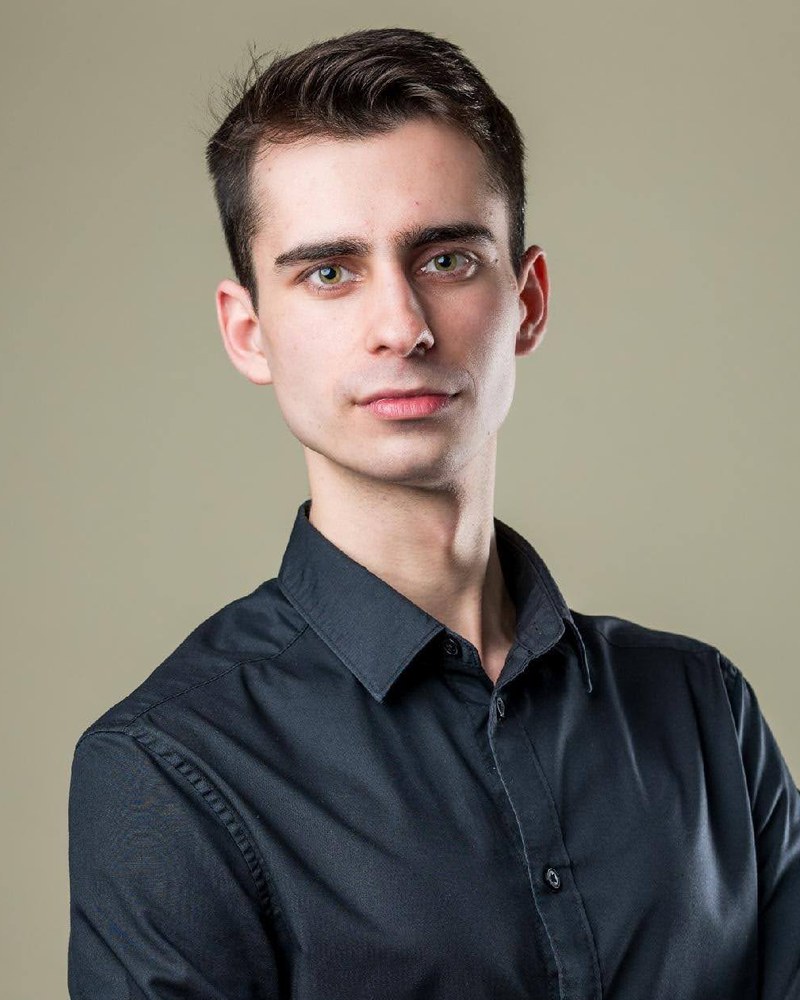
Co-Founder
Biophysicist and PhD researcher in materials engineering with hands-on wet-lab and medtech experience. Focused on translating scientific workflows into products researchers can actually use.


 Aptamedica
Co-Founder
Biophysicist working across bioinformatics, computational biology and LLM research, with experience building scientific software and AI-driven workflows.

Co-Founder
Stanford CS/AI + Mathematics. Builder of AI products with experience in startups, engineering and the Stanford entrepreneurial ecosystem.

Describe what you want to test, or paste a paper, protocol or DOI.
Telomis will structure the experiment and show you what is missing before you run it.
Questions? contact@telomis.com